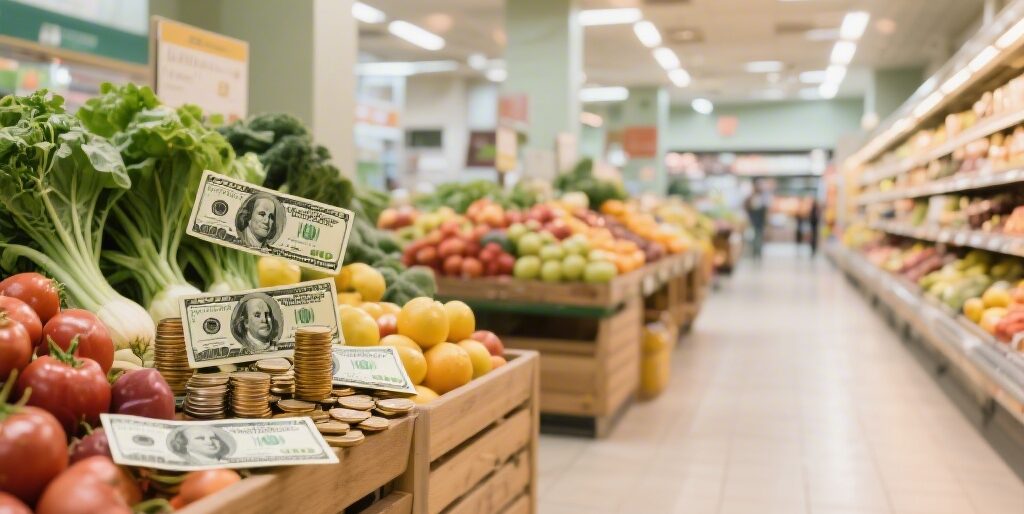
Let me be honest with you. I used to spend way too much on groceries. We’re talking $600+ per month for two people. It wasn’t even fancy stuff — just regular shopping at my local supermarket, grabbing whatever looked good, and tossing it in the cart without much thought.
Sound familiar? Yeah, I thought so.
The worst part was that I told myself I didn’t have time for couponing. Those extreme couponer shows looked exhausting. Clipping papers, organizing binders, checking multiple stores — who has energy for that? Not me.
But here’s what changed everything: I discovered you don’t need coupons to save serious money on groceries. I cut my bill by almost 40% without clipping a single paper or downloading any extreme couponing apps.
The Unit Price Game-Changer
Here’s something most people miss. That $3.99 bottle of shampoo isn’t necessarily cheaper than the $8.99 one. Check the unit price — the cost per ounce, pound, or liter. It’s usually printed in small text on the shelf label.
I felt like an idiot when I realized I’d been buying cheap cereal that cost $0.45 per ounce when the bulk bag two shelves down was $0.18 per ounce. The bigger bag looked more expensive at $7.99 versus $3.49, but I was getting more than double the cereal.
Brands know we look at the total price, not the unit price. They exploit this constantly. Start checking those tiny numbers. Your wallet will thank you.
Store Brands Are Not the Enemy
I was such a snob about store brands. Wouldn’t touch them. Thought they were inferior products for poor people. Super classy attitude, right?
Then a friend who works in food manufacturing told me something interesting. Many store-brand products come from the exact same factories as name brands. The same equipment, the same ingredients, sometimes just different packaging.
Now, I’ll grant you some things are genuinely different. Store-brand cereal might have slightly different recipes. But for basics like flour, sugar, milk, eggs, canned vegetables, and frozen fruits? The store brand is usually identical and 20-40% cheaper.
Start with one category. Try store-brand oatmeal or frozen berries. If you can’t tell the difference, make the switch permanent. I personally can’t taste any difference in store-brand Greek yogurt, canned beans, or butter.
The Rotating Grocery Store Strategy
This one requires a bit of upfront research but pays off massively. Different stores have different strengths. In my area:
- Aldi crushes it on produce and dairy prices
- Costco wins for bulk meat and pantry staples
- My local ethnic grocery store has unbeatable prices on spices and rice
- The fancy grocery store is actually cheapest for sale-priced craft beer (weird but true)
I don’t shop at all four every week. That would be exhausting. Instead, I rotate. This week is Aldi week. Next week I hit Costco for meat to freeze. The week after, I stock up on spices at the ethnic market.
Yes, it takes more planning. But I’m spending 30% less on groceries than when I was a loyal customer to one overpriced supermarket.
Stop Buying Pre-Cut Everything
I get it. We’re all busy. Pre-cut vegetables save time. But you’re paying a huge markup for that convenience.
Those cute little bags of pre-cut bell peppers? They cost about 3-4 times what whole peppers cost. That container of fresh cut fruit? Easily 5x the price of buying whole fruit.
Here’s my compromise: I designate one hour on Sunday for food prep. I wash and chop vegetables for the week. I portion out snacks into reusable containers. I cook a big batch of rice or grains.
One hour of work saves me $30-40 per week. That’s over $1,500 per year for one hour of casual TV-watching and chopping. Worth it.
The Meal Plan Around Sales Method
Most people plan meals, then buy ingredients. I do the opposite.
Every Sunday, I check the weekly ads for my go-to stores. I note what’s on sale — especially meat and produce. Then I build my meal plan around those sale items.
Chicken thighs are $0.99/lb this week? We’re having chicken curry, chicken soup, and roasted chicken. Ground beef is on sale? Tacos, meatballs, and shepherd’s pie it is.
This strategy has the added benefit of forcing variety into my diet. I used to cook the same 5-6 meals on rotation because they were my recipes. Now I’m constantly trying new things based on what’s cheap.
Embrace the Odd Cuts of Meat
Boneless, skinless chicken breast is convenient but expensive. Meanwhile, chicken thighs with bones cost half as much and actually have more flavor.
Pork shoulder is dirt cheap and makes incredible pulled pork. Beef chuck roast becomes amazing pot roast. Whole chickens cost less per pound than any cut and give you bones for homemade stock.
I learned to butcher my own chickens from YouTube. It took maybe two tries to get decent at it. Now I save $2-3 per pound on chicken.
There’s something deeply satisfying about using the whole animal too. The bones become stock. The skin becomes cracklings. It feels respectful and smart.
Your Freezer Is Your Best Friend
Before I got serious about grocery savings, my freezer was basically a graveyard of half-eaten ice cream and frozen pizza. Now it’s a strategic asset.
When ground beef goes on sale for $2.99/lb, I buy 10 pounds. I portion it into 1-pound bags and freeze it. Same with chicken, butter, cheese, and bread.
I also freeze leftover wine in ice cube trays for cooking. I freeze fresh herbs in olive oil. I freeze overripe bananas for smoothies and banana bread.
A well-stocked freezer means you can wait for sales instead of paying full price. It also means fewer emergency takeout orders because you have nothing to eat.
Shop Your Pantry First
Here’s a weird trick that sounds obvious but most people don’t do: before you grocery shop, look at what you already have.
I used to buy new stuff every week without checking. I’d end up with four half-empty bottles of soy sauce and three bags of rice because I forgot what was in the back of the cupboard.
Now I do a quick pantry check before making my list. I challenge myself to use up what I have before buying more. Sometimes this leads to weird but fun meals. Chickpeas + coconut milk + curry paste = surprisingly good dinner.
Skip the Prepared Foods Section
Those rotisserie chickens look tempting. So do the pre-made salads and heat-and-eat meals. But you’re paying massive markups for convenience.
A rotisserie chicken at my store costs $7.99. A whole raw chicken costs $5. Yes, the rotisserie one is cooked. But roasting a chicken takes literally 5 minutes of active time. The oven does the rest.
Pre-made salads are even worse. That $6 container of pasta salad probably costs $1.50 in ingredients. Make it yourself on Sunday and portion it out for the week.
The Bottom Line
You don’t need to become an extreme couponer to save money on groceries. You just need to be a little more intentional. Check unit prices. Try store brands. Plan around sales. Use your freezer. Cut your own vegetables.
None of these strategies are revolutionary. But combined, they cut my grocery bill from $600+ to about $380 per month. That’s $2,640 per year in savings. For what? Maybe an extra hour of planning and prep per week?
That’s a trade I’ll make every time.
Start with just one or two of these strategies. Once they become habits, add another. Small changes compound into big savings. Your future self — and your bank account — will be grateful.